Author: admin436

  • Teddy Atlas Questions Tyson Fury Work Rate Vs Makhmudov

    [ad_1]

    Teddy Atlas pointed straight at that issue when breaking down Fury’s position ahead of the fight. He did not question the tools. He questioned how often they are used.

    “He will be sporadic with his offense, inconsistent. He will punch and clinch sometimes. He will throw one, two, and be done, and when he does that, he will allow moments to go by and rounds to go by,” Atlas said on his YouTube channel.

    That description fits with what has been seen in Fury’s last three outings against Oleksandr Usyk and Francis Ngannou. When Teddy Atlas talks about those “sporadic” bursts, he is essentially describing a fighter who is trying to work with his own gas tank

    Under SugarHill Steward, Fury became a destructive, front-foot fighter. It worked against Deontay Wilder because Wilder is essentially a slugger; Fury’s aggression overwhelmed him. But that style is physically taxing.

    At 37, Fury seems to have transitioned from a high-volume seeker of KOs back to a clinch-and-rest” specialist, but without the elite footwork he had in 2015.

    Atlas still sees a clear path for Fury in his matchup against Makhmudov. The size, the reach, and the ability to control distance should be enough to dictate the fight if he stays active.

    “If he’s got anything left, it’s target practice,” Atlas said of Fury facing Makhmudov.

    Atlas’s comment about “target practice” suggests that against a slower, more stationary target like Makhmudov, Fury can afford to be inconsistent. But the danger is that this “sporadic” offense isn’t a choice.

    If he allows Makhmudov to stay in the fight because he’s too tired to finish the job, he’s playing a dangerous game with a guy who has 19 KOs. He might have gotten away with it against a faded Chisora or a hesitant Whyte, but at this age, it’s risky to do so against a high-pressure puncher like Makhmudov.

    “I could see where there could be just sporadic offense, inconsistent offense, and in that way, seconds tick off the clock, and rounds go by,” Atlas said.

    Atlas is essentially warning us that Fury is now a four-round fighter stretched across a twelve-round frame. He has to pick his spots because he can’t own the whole canvas anymore.

    The punch, grab, and lean strategy Fury now relies on wears down his opponent’s energy, but if they refuse to be held or are physically powerful, it doesn’t work.

    Makhmudov is a massive human being with a background in the Soviet school of wrestling and heavy-handed boxing. He isn’t a limited, thin-legged fighter or a small heavyweight. If Fury tries to lean on him to catch his breath, he might find himself in a grappling match he doesn’t have the energy to win.

    YouTube video


    [ad_2]

    Source link

  • Deontay Wilder Vs Derek Chisora Post Fight Review

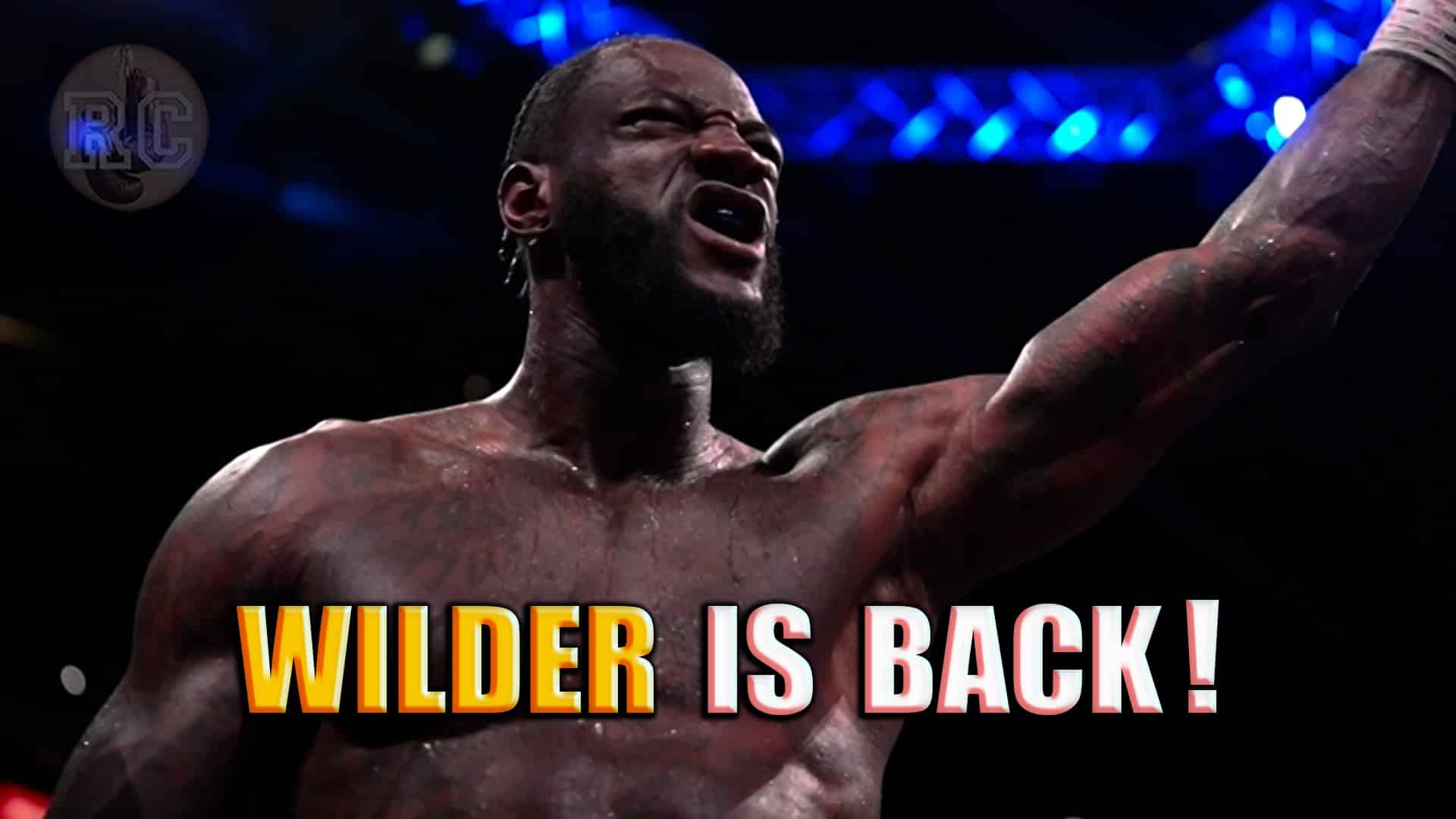
    Deontay Wilder Vs Derek Chisora Post Fight Review

    [ad_1]

    YouTube video

    The fight was duly billed as simply “100” – the implication being that, this was the 50th professional fight for Chisora, and also the 50th professional bout for Wilder, add them together and it = a whopping 100. This is actually a considerable feat given the general lack of activity among heavyweights in the modern era, prospects in the developmental stages included.

    Saturday night at the O2 Arena in London, we witnessed a heavyweight encounter that was as bizarre as it was entertaining. In a battle of two veterans in their 40s, both celebrating their 50th professional bouts, Deontay Wilder and Derek Chisora reminded us why we love (and sometimes scratch our heads at) the Sweet Science.

    From a trainer storming the ring in the opening round to point deductions, strange “vision” breaks, and a flurry of knockdowns and slips, this was a fight that defied technical textbook logic. It was messy, it was scrappy, and it was a bit sloppy and a bit ugly, but the heart and determination from both boxers was there in plain sight for all to see. They both gave it their best and battled it out with everything they had. It was an ugly fight, yet it was captivating from start to finish.

    At the end of 12 rounds, one judge had 115-112 for Chisora, overruled by the other two who had it for Wilder, 115-111 and 115-113. It was a split decision victory for Deontay Wilder, and that is now two wins in a row for Wilder.

    This edition of Rummy’s Corner will provide a detailed breakdown of Wilder’s victory against Chisora. Please watch and enjoy the video for one man’s opinion. This is Rummy’s Corner (written, narrated, and produced by Geoffrey Ciani).

    [ad_2]

    Source link

  • Mark Magsayo Stops Feargal McCrory In Round Five

    Mark Magsayo Stops Feargal McCrory In Round Five

    [ad_1]

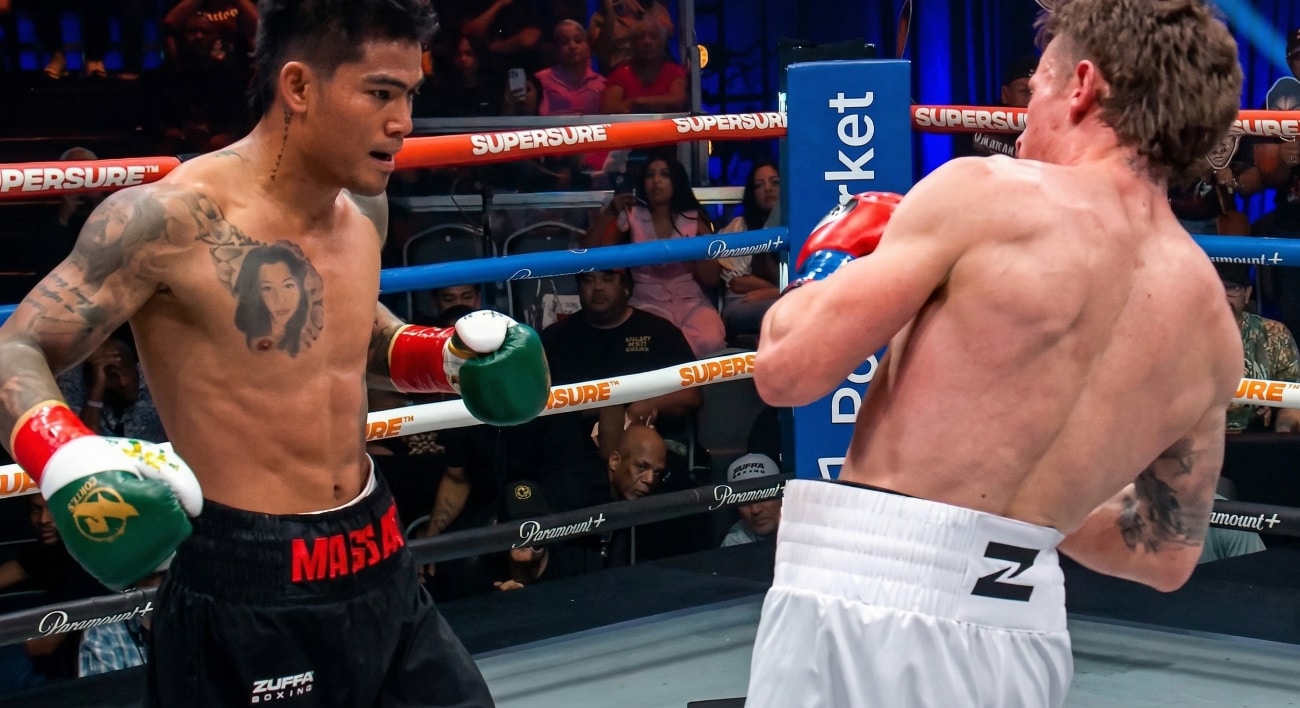
    While McCrory remained the aggressor, his pressure failed to rattle the Filipino star. Magsayo looked comfortable fighting off the back foot in the second, finding a home for three consecutive hooks and a sharp lead right. By the third round, Magsayo’s defensive rhythm was locked in, allowing him to slip the majority of McCrory’s volume while landing a punishing right hand midway through the session.

    The fourth round saw Magsayo widen the lead significantly. He connected on a full four-punch combination and later lured McCrory into a stinging left hook to the liver. A Magsayo right hand with 35 seconds left in the round sent McCrory stumbling. Though the Irishman tried to trade in the closing moments, he simply absorbed more clean punishment.

    Concerned for his fighter’s safety, McCrory’s trainer issued a final warning between rounds. Magsayo wasted no time in the fifth, landing heavy shots immediately and forcing the corner to step onto the canvas just 21 seconds in. McCrory reacted with a scream of frustration, but the intervention spared him from unnecessary trauma.

    Magsayo improves to 29-2 with 19 KOs. Since losing his WBC featherweight title to Rey Vargas and dropping a subsequent decision to Brandon Figueroa, he has found a second wind in the higher weight classes.

    “Big difference,” the 30-year-old Magsayo noted regarding his move up in weight. “The weight, the training camp, the sparring, everything. I’m strong, I’m powerful in this division.”

    For McCrory, the loss moves his record to 17-2. It marks his second defeat in three outings, following an eighth-round stoppage against Lamont Roach Jnr in mid-2024.

    [ad_2]

    Source link

  • Dubois Calls Baumgardner A Drug Cheat, Demands Fight

    Dubois Calls Baumgardner A Drug Cheat, Demands Fight

    [ad_1]

    Dubois made the comments after her latest win, where she was asked about Baumgardner’s recent remarks and potential future bout. She did not hold back when addressing Baumgardner’s past failed test and subsequent performances.

    “She’s a drug cheat,” Dubois said to Fight Hub TV about Baumgardner. “I have never in my life failed a drug test. It wasn’t just a light little weight loss drug. It was a serious muscle performance and heart-developing drug.”

    Dubois went further, linking Baumgardner’s form to the failed test.

    “Look at Alysia before and after. She was explosive, powerful, and dangerous. Then she failed that drug test, and she hasn’t looked the same since. She can say what she wants, but she’s failed for a reason.”

    Caroline Dubois is playing a calculated game here. In boxing, these kinds of “rough words” serve two purposes: they build the commercial value of a fight, and they test an opponent’s psychological discipline.

    From a business perspective, this is a massive success. Dubois is no longer just a talented prospect or a quiet champion. By using the “drug cheat” label, she has turned a standard unification conversation into a personal grudge match.

    The 25-year-old also made clear she wants the fight next, describing it as the biggest available option rather than pursuing other title routes.

    “I want that fight by the end of the year. There’s no need to waste time. The best versus the best. That’s the fight I want.”

    Dubois added that she believes the matchup is inevitable given the attention around it and the current schedule, with Baumgardner already committed to an upcoming bout.

    “If she’s really that girl, then let’s make it happen. Me and her, we’re tailor-made for each other. I know what I can do, and I would take her out.”

    The danger is that Dubois might be poking a sleeping giant. Alycia Baumgardner is notoriously prideful and thrives on being the aggressor in a rivalry.

    The words have already worked in terms of visibility. Dubois has effectively ended the “puppy” narrative and established herself as a peer and a threat. However, she has also ensured that when they do step into the ring, she’ll be facing a version of “The Bomb” that is looking to make a very violent point.

    WBC lightweight champion Dubois defeated WBO champion Terri Harper in a unification fight earlier tonight at the Olympia.

    YouTube video

    [ad_2]

    Source link

  • Mosley Jr Vs Bohachuk Headlines Zuffa Boxing 06 May 10

    Mosley Jr Vs Bohachuk Headlines Zuffa Boxing 06 May 10

    [ad_1]

    The bout was confirmed during Sunday’s Zuffa Boxing 05 prelims, which featured Andres Cortes vs. Eridson Garcia in the headline slot on the same platform.

    Mosley (22-5, 12 KOs) will be making his promotional debut with Zuffa Boxing. He last fought on Dec. 6, dropping a unanimous decision to Jesus Ramos in a 12-round middleweight fight.

    Prior to that loss, Mosley had won five consecutive bouts, including a decision victory over former middleweight titleholder Daniel Jacobs in July 2024. He is the son of Hall of Famer Shane Mosley.

    Bohachuk (27-3, 24 KOs) returns for his second appearance under the Zuffa banner. He most recently edged Radzhab Butaev by split decision on Feb. 1 in a competitive 10-round fight.

    In the stretch before that, Bohachuk went 2-2 over four outings, including a narrow majority decision loss to Vergil Ortiz in 2024 and a defeat to Brandon Adams in their 2025 rematch.

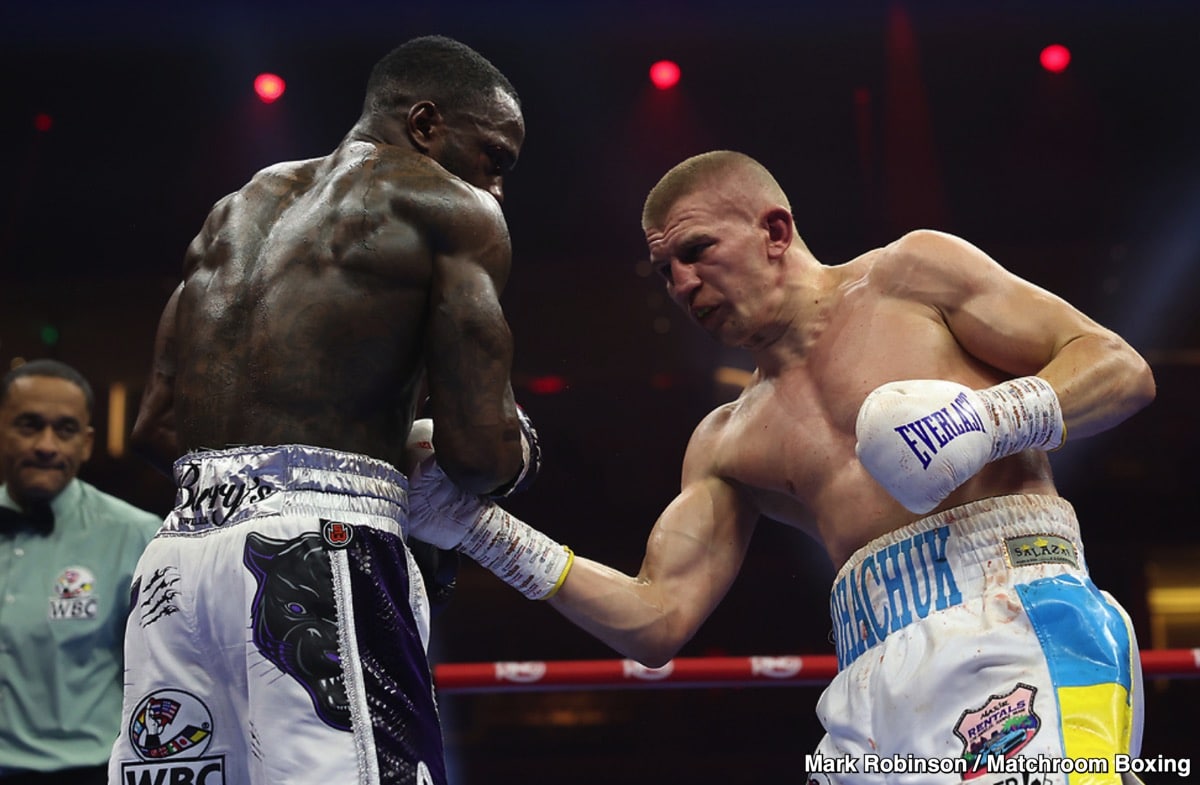
    It feels like a crossroads fight where the loser likely falls out of the title picture for good. Bohachuk is a volume machine, but he has looked human lately. That 12-round war with Vergil Ortiz in 2024 took a massive physical toll, and his performances since then have lacked that same relentless spark.

    Even in the split decision over Butaev, he wasn’t the same “steamroller” we saw a couple of years ago. Bohachuk has looked slow and sluggish.

    Bohachuk’s power is his equalizer. Even when he is technically off, he can still hit hard, and that wears opponents down.

    Shane Jr. has surprisingly good fundamentals and a high ring IQ, but at 35, the clock is ticking. His lack of activity is a major problem against a guy like Bohachuk, who forces you to work every second of every round.

    Mosley’s loss to Jesus Ramos Jr. showed that while he is durable, he can be outworked by younger, more explosive talent.

    If Mosley Jr. can use his reach and keep this at a distance, he can win rounds. But if Bohachuk forces him into a phone booth fight, the 35-year-old might find the pace suffocating.

    The undercard will include Julian Rodriguez vs. James Perella, along with Misael Rodriguez facing Andreas Katzourakis.

    [ad_2]

    Source link

  • Hovhannisyan Wins 10-Round Decision Over Baez

    Hovhannisyan Wins 10-Round Decision Over Baez

    [ad_1]

    Baez (25-8-2, 10 KOs) had success early, landing the cleaner shots and taking advantage of Hovhannisyan’s slower start as he adjusted. The fight became more physical as it progressed, with Hovhannisyan warned for rabbit punches and going low more than once, while Baez held his ground and exchanged at close range.

    Once Hovhannisyan adjusted to that arm issue, he really took control of the geography of the ring.

    Even if Baez was landing sporadically, the judges almost always favor the guy who is moving forward and forcing the action. Hovhannisyan’s pressure made Baez look like he was fighting to survive rather than fighting to win.

    Baez had a solid start, but he seemed to fade just as Hovhannisyan was finding his second wind. In a close ten-rounder, the judges’ “recency bias” often kicks in, meaning those strong closing rounds for Azat were more important than Baez’s early success.

    Hovhannisyan (23-6, 17 KOs) found his best work with the right hand, landing clean shots in the middle rounds and even taunting Baez in the sixth after taking a punch. The exchanges stayed competitive rather than breaking into a sustained brawl, but Hovhannisyan’s pressure and more eye-catching shots gave him the edge on two scorecards.

    The ninth round included another low shot from Hovhannisyan, though he closed stronger, pressing the action and landing the more noticeable punches down the stretch. That late activity helped him separate just enough to secure the decision in what registered as a minor upset on the betting lines.

    While Hovhannisyan was limited to one arm for stretches, the right hands he did land were much more eye-catching. Baez’s work was cleaner early, but it lacked the impact needed to keep a surging Hovhannisyan off him.

    It’s a classic case of the betting favorite being technically sound but getting outworked by a guy with more grit. Calling it an upset feels a bit like a stretch when one fighter is clearly dictating the terms for the entire second half of the fight.

    Hovhannisyan improved to 23-6 (17 KOs) with the win, giving him a second straight victory following a three-fight skid. Baez fell to 25-8-2 (10 KOs) after a steady effort that kept him competitive across the full ten rounds, but he couldn’t do enough to hold off the late push.

    [ad_2]

    Source link

  • When Is Too Old In Boxing? No Clear Answer Exists

    When Is Too Old In Boxing? No Clear Answer Exists

    [ad_1]

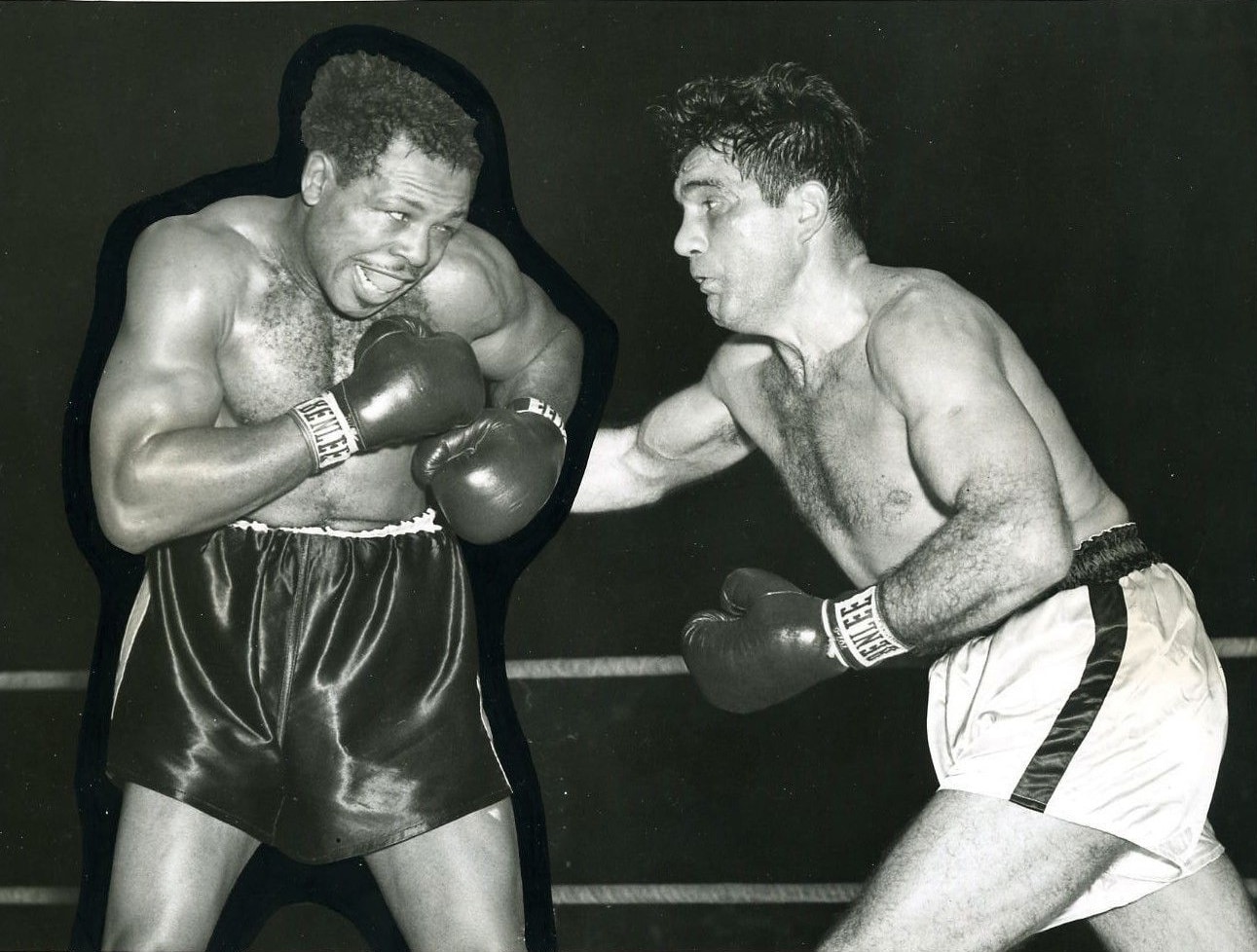
    History provides enough examples to keep the argument alive. George Foreman regained the heavyweight title at 45 when he stopped Michael Moorer, while Archie Moore remained competitive at the highest level into his mid-40s.

    In lower weight classes, fighters have also extended their careers beyond the expected range. Roberto Duran captured a middleweight title at 37. Azumah Nelson and Eder Jofre both won titles at 37. Daniel Zaragoza and Gianfranco Rosi were still winning belts at 37 and 38, respectively.

    Bernard Hopkins dismantled younger, faster champions like Jean Pascal and Tavoris Cloud well into his late 40s. By winning a world title at 49, he pushed the “Foreman Line” even further back.

    Hopkins proved that if a fighter masters the “Old Man” style, relying on economy of movement, psychological warfare, and defensive fundamentals, they can effectively “bend time,” as he often put it.

    However, for every Hopkins or Foreman, there are hundreds of fighters whose names aren’t in those history books because the sport’s lack of a fixed limit caught up to them.

    Other champions found success in their 30s, reinforcing the idea that age does not affect every fighter the same way. Sugarboy Malinga won a super middleweight title at 36.

    Juan Martin Coggi won at 34, while Luis Estaba and Dado Marino also claimed titles in their early 30s. Even at the lighter weights, where speed is often considered decisive, fighters like Santos Laciar and Samuth Sithnaruepol were able to hold titles into their late 20s, extending careers that might otherwise have been shorter.

    Those results are often used to support the belief that experience and style can offset age. They are real, but they do not reflect the typical outcome.

    Defensive wizards and power punchers tend to last longer. Speed and reflexes are the first things to go, which is why we rarely see 40-year-old flyweight champions, but heavyweight and light heavyweight history is littered with them.

    It’s often not the age, but the mileage. A 30-year-old who has been in ten wars might be older in boxing terms than a 40-year-old who rarely gets hit.

    Because boxing is a business, a fighter’s name often outlives their ability. Promoters will continue to book a legendary name as long as it sells tickets, even if the “timing and durability” you mentioned have clearly slipped.

    [ad_2]

    Source link

  • Fury Promises To Clown Makhmudov In Risky Fight Plan

    [ad_1]

    The visual from the first Usyk fight is exactly what haunts Fury’s “clowning” reputation. He was pulling faces and leaning on the ropes to show Usyk he couldn’t be hurt, only to find himself on “Bambi legs” by the ninth round, barely saved by the bell and the ropes.

    If he tries those same antics on Saturday, April 11, against a man who is literally called “The Lion” and carries a 90% KO ratio, it could move from “showmanship” to “embarrassment” very quickly.

    “I’m going to have fun,” Fury said to OOOSCH TV. “I’m going to be clowning. I’m going to put me hands down behind me back taunting him. He’s going to be feeling frustrated, and then I’m going to chin him.”

    The taunting is a classic Fury staple, regarding the psychological warfare. If he can get Makhmudov to swing wildly out of frustration, he’s halfway to a victory.

    Fury knows that Makhmudov is at his most dangerous when he is composed and setting his feet. By “clowning,” Fury is trying to neutralize his power by frustrating him.

    Makhmudov has a reputation for being an “intimidating” figure, but we haven’t seen how he reacts to someone laughing in his face while he’s trying to land life-changing power.

    “He’s a big puncher and very dangerous,” Fury said. “If he gets me one, he could finish me off. So, you’ve got to be very switched on for all these fights.”

    Even with that admission, Fury returned to the idea of control through pressure and unpredictability. He suggested Makhmudov has not faced a fighter of his level, positioning himself as a step above the opposition Makhmudov has seen.

    “I don’t believe he’s ever been in there with an elite specimen like myself,” Fury said. “When he gets in there, he’s going to realize he’s out of his depth completely.”

    If Fury dominates, he validates his status as the division’s “Specimen.” But if he gets caught while showboating or lumbers to a close decision against a guy Dave Allen troubled, the “plastic resume” crowd will have all the evidence they need.

    YouTube video


    [ad_2]

    Source link

  • Caroline Dubois Vs Terri Harper Result, Knockdown Win

    Caroline Dubois Vs Terri Harper Result, Knockdown Win

    [ad_1]

    Caroline Dubois defeated Terri Harper by 10-round unanimous decision, with scores of 98-91, 98-91, and 97-92, on Sunday, April 5, 2026, at Olympia in London, to retain her WBC lightweight title and add the WBO and Ring belts.

    Caroline Dubois (13-0-1) retained her WBC title and added the WBO and Ring belts with a decision win over Terri Harper (16-3-2).


    The opening rounds were quiet. Dubois edged them on activity, stepping forward behind her jab while Harper circled and picked single shots.

    That pattern held until round six, when Dubois landed a sharp one-two that sent Harper to the canvas. Harper beat the count, but the knockdown created clear separation on the cards.

    From that point, Dubois took control of the fight. She dictated range, landed the cleaner punches, and forced Harper onto the back foot for long stretches.

    A clash of heads later opened a cut above Harper’s left eye, and the blood became a factor as the rounds wore on. Dubois stayed composed, maintaining her output and avoiding unnecessary exchanges.

    Harper had moments, particularly with body work, but she could not close the gap. The fight went the distance, and Dubois’ activity and accuracy secured the decision.

    Dubois had predicted a stoppage before seven rounds. It didn’t come, but the knockdown and her control of the fight left little doubt on the scorecards. She now holds two belts and the Ring title at lightweight, and she looks firmly in charge of the division.

    Click here to subscribe to our FREE newsletter

    Related Boxing News:

    Last Updated on 2026/04/05 at 5:51 PM

    [ad_2]

    Source link

  • Eddie Hearn Downplays Deontay Wilder Win After Chisora

    Eddie Hearn Downplays Deontay Wilder Win After Chisora

    [ad_1]

    “I wasn’t impressed with Wilder, but I was more impressed than I thought,” Hearn said to Fight Hub TV in his post-fight interview.

    Hearn acknowledged improvement, then immediately capped it. By saying he was “more impressed than I thought,” he’s essentially admitting his expectations for Wilder were at rock bottom.

    Hearn is definitely holding back. If he goes full analyst and trashes the performance, he kills the pay-per-view value of a potential Joshua vs. Wilder fight. By keeping it to “not impressed,” he maintains a shred of dignity for the matchup while internally likely feeling very confident that AJ handles this version of Wilder with ease.

    He’s basically saying Wilder is good enough to be a big-name opponent, but no longer good enough to be a true threat to the top tier.

    One of the weirder moments last night was Wilder appearing to take pity on Chisora in the 9th round, even telling him to “live for his kids.” While that’s noble on a human level, it’s the opposite of what Hearn needs to sell a fight against Joshua.

    Hearn needs the “Bronze Bomber,” the guy who wants to “see a body” in the ring. A “compassionate” Wilder who hesitates to pull the trigger is much harder to market as a threat to AJ.

    Wilder’s performance wasn’t exactly vintage. He looked hesitant, and his timing was off for large stretches. While he still possesses that equalizer in his right hand, the ability to set it up against world-class opposition seems to be fading.

    Hearn knows that if he makes this fight now, Joshua is a massive favorite. If the fans don’t believe Wilder can win, the Pay-Per-View numbers won’t hit the heights Hearn needs to justify the massive purses both men would demand.

    YouTube video


    [ad_2]

    Source link